Vaccination advice for travelers with an immune disorder: when to vaccinate
Would you rather arrange this straight away?
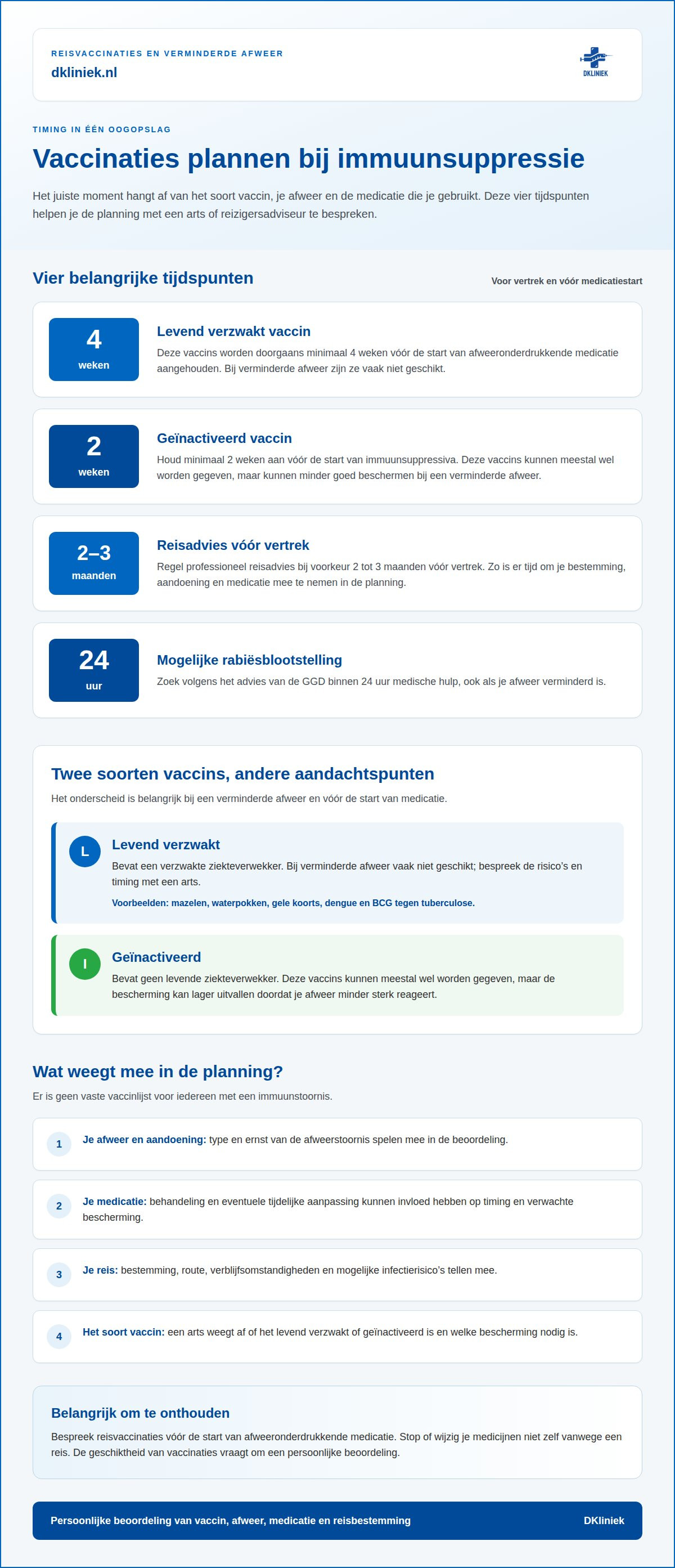
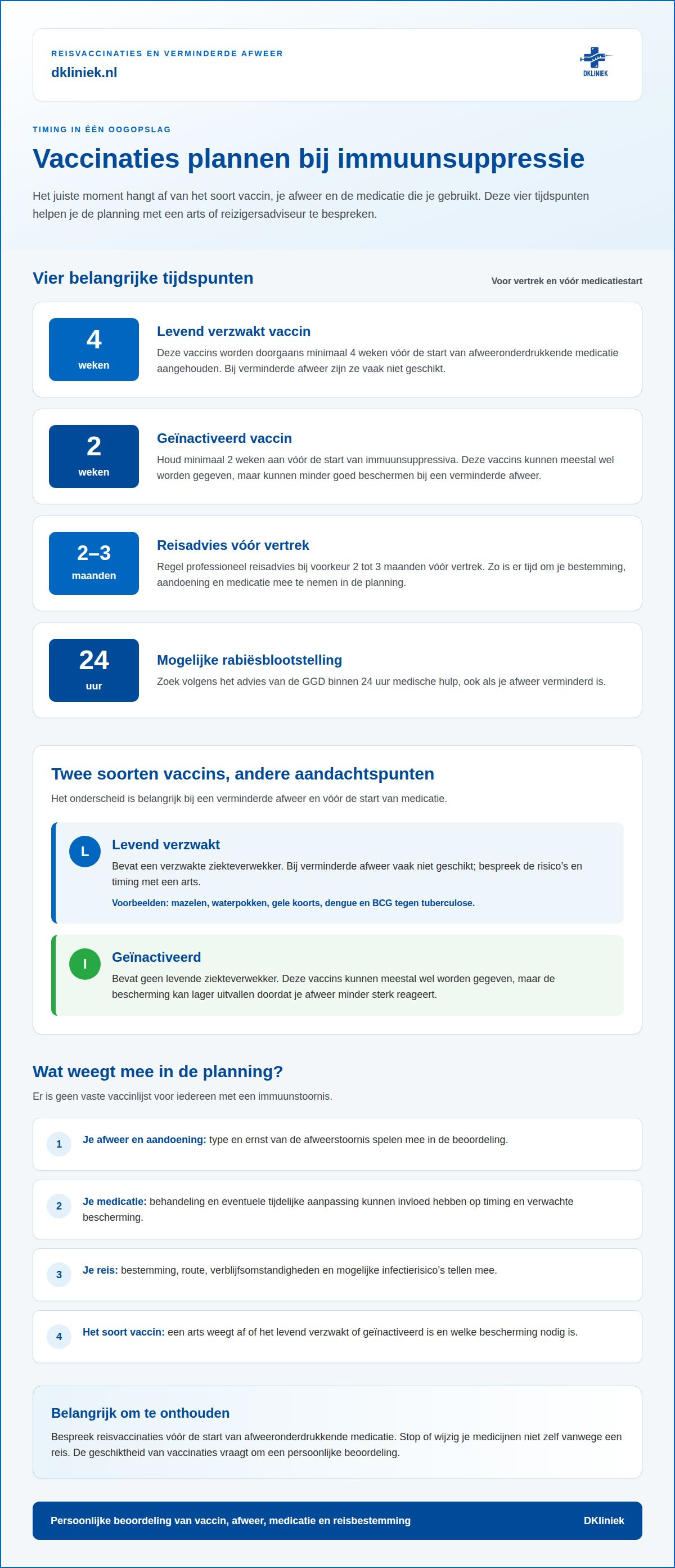
Book an appointmentVaccinating during immunosuppression does not always mean that you must postpone vaccinations. Proper vaccination advice for travelers with an immune disorder depends on your immune status, the type of vaccine, and the medication you are using. Live vaccines are often contraindicated in cases of compromised immunity; prior to starting immunosuppressive medication, a general interval of 4 weeks is typically required for such vaccines.
It is understandable if you have doubts about safety or the right timing. Inactivated vaccines may also sometimes be less effective when your immune system is compromised. For these vaccines, a minimum of 2 weeks prior to starting immunosuppressants is recommended. Precise scheduling therefore requires a careful evaluation of the trip, your underlying condition, and your treatment.
In this article, you will read when vaccinating prior to starting immunosuppressive medication may be advisable, what risks live vaccines entail, and why primary immunodeficiencies require special attention. You will also learn how medication can influence timing and expected protection, allowing you to thoroughly discuss your travel health advice.
Key Takeaways
- Discuss travel vaccinations before starting immunosuppressive medication; the optimal timing partly depends on the type of vaccine.
- Live vaccines can pose risks in individuals with compromised immunity. Learn why timing and your medication are crucial factors.
- Vaccines may offer less protection in the presence of an immune disorder. Both the underlying condition and treatment play a role in this assessment.
- In primary immunodeficiencies, the specific type and severity of the immune disorder determine which travel risks and precautions require attention.
Risks of Live Vaccines in Compromised Immunity
A physician evaluates your immune status, medication, destination, and potential infection risks to determine which travel vaccinations are appropriate for you. Whether a vaccine is live-attenuated or inactivated is also a critical consideration.
Live-Attenuated versus Inactivated Vaccines
Live-attenuated vaccines contain a weakened pathogen; inactivated vaccines contain no live pathogens. This distinction is crucial: in cases of compromised immunity, live vaccines are often not suitable, whereas inactivated vaccines can usually be safely administered. However, they may confer reduced protection because your immune system responds less robustly to the injection.
Examples of live vaccines include those against measles, varicella (chickenpox), and yellow fever. The dengue vaccine and BCG for tuberculosis can also pose risks due to their live components. In individuals with compromised immunity, these vaccinations often cannot be given. In some cases, vaccinating prior to starting immunosuppressive medication is an option; for live vaccines, an interval of 4 weeks prior to initiating immunosuppression is generally observed.
Safety Assessment by a Physician
A physician assesses safety by weighing the type of immune disorder, ongoing treatment, and travel destination together. For instance, yellow fever may be a relevant risk at your destination, whereas the yellow fever vaccine itself could pose a serious risk if your immune system is compromised. Measles, varicella, and dengue also require careful consideration. The risks in special traveler groups depend partly on the specific condition and medications involved.
An inactivated vaccine may be appropriate, but its effectiveness may be reduced. This also applies to travel vaccinations against infections to which you are particularly vulnerable. Therefore, discuss which protection is needed—such as against pneumococcal disease—and whether vaccination will provide adequate coverage. In the event of potential rabies exposure, the GGD (Public Health Service) advises seeking medical attention within 24 hours, even if your immune system is impaired. Traveling to an alternative destination with fewer risks may also be considered in some circumstances.
Vaccinating Prior to Immunosuppressive Medication
Administering vaccinations before you start immunosuppressive medication is often preferable. The correct timing depends on the type of vaccine and your departure date.
Scheduling Vaccinations Prior to Medication
Vaccinating before starting immunosuppressants allows your immune system the opportunity to mount an adequate response to the vaccine. For inactivated vaccines, a minimum interval of 2 weeks prior to starting therapy is recommended. For live vaccines, different precautions apply, as discussed under the risks of live vaccines.
Arrange for professional travel health advice preferably 2 to 3 months before departure. This ensures sufficient time to incorporate your destination, medical condition, and medication into the planning. A consultation is also valuable if your medication is being temporarily adjusted. Never stop or modify prescribed medications on your own because of travel.
There is no standard vaccine checklist that applies universally to everyone with an immune disorder. Whether vaccination against yellow fever is necessary depends on your destination and itinerary. Whether it is medically appropriate must be assessed separately: the yellow fever vaccine is live-attenuated and can pose significant risks in immunocompromised individuals.
Travel to Yellow Fever Endemic Areas
If you cannot receive a live yellow fever vaccine, traveling to an area where yellow fever is endemic requires extra vigilance. Without vaccination, exposure to the disease remains a serious risk. Therefore, discuss your destination, travel route, and accommodation conditions holistically. In some cases, selecting an alternative destination is safer if the risks are deemed too high.
Having a chronic illness does not automatically mean your immune system is compromised. Whether you can receive vaccinations depends on your specific condition and any medication you take. With immunosuppression, supplementary vaccinations may actually be strongly recommended, such as against influenza, meningococcal disease, pneumococcal disease, or Hib. In the case of primary or acquired immunodeficiencies, your treating specialist can specify which vaccinations are indicated for your condition. A personalized travel consultation helps align vaccinations and medication with your upcoming journey.
Some individuals with Crohn's disease, ulcerative colitis, or rheumatoid arthritis use immunosuppressive drugs. Vaccinations administered prior to initiating these medications or during a temporary treatment pause may yield better and longer-lasting protection.
Before departure, consult with a travel medicine specialist and/or your treating physician regarding which risks and supplementary precautions apply to you.
Reliability and Safety of Vaccinations
During a vaccination consultation for travelers with an immune disorder, it is essential that your questions remain central. A comprehensive pre-travel consultation is part of the vaccination services at DKliniek. Use this consultation to clearly identify the decisions you need to make and any concerns you may have. This ensures you discuss not only the injection itself, but also everything you wish to understand beforehand.
For example, you can ask how a vaccination is evaluated in relation to your ongoing treatment. Inquire also about what information is required to thoroughly assess your situation. This includes the exact diagnosis of your condition, your treatment regimen, and the itinerary for which you are seeking advice. This keeps the conversation focused and allows you to address uncertainties immediately.
Would you like to know what the recommendations mean for your travel plans? Ask which points remain open and what the next steps are. You can also discuss which vaccinations are relevant for your trip, such as DTP or hepatitis A. Preparing a list of your questions will help you conduct a focused conversation and prevent important topics from being overlooked.
Personalized vaccination advice for travelers with an immune disorder should be clear and accessible. Ask for clarification if a medical term or recommendation is unclear. Have the specialist explain which rationale applies to your specific situation and what information is needed to support it. You do not need to know medical terminology; simply ask your questions in your own words.
After the consultation, you can review the discussed options at your own pace. Note which questions have been answered and what still needs to be reviewed with your treating specialist. Do not alter your treatment based on unclear assumptions. A transparent discussion provides the clarity needed to make informed decisions regarding vaccinations and your travel preparation.
Vaccination in Primary Immunodeficiencies
In primary immunodeficiencies, travel vaccination depends on the specific type and severity of the immune defect. These factors determine which infections present an increased risk and which vaccines are safe and appropriate.
A specialist will incorporate your diagnosis, vaccination history, and travel destination into the recommendations. As a result, two individuals with an inborn immune disorder may receive entirely different vaccination plans. It also matters whether your immune system primarily has impaired antibody production or deficiencies in other immune compartments. This distinction influences the degree of protection a vaccine can provide.
Measles vaccination, for example, warrants special attention. The MMR vaccine is live-attenuated and may be contraindicated in severe immune disorders. At the same time, measles can follow a much more severe clinical course in immunocompromised individuals. The specialist therefore weighs the risk of infection at the destination against the risks of a live vaccine. In some instances, additional preventive measures or an adjusted itinerary are necessary.
Protection against pneumococcal disease may also be indicated. In the outlined immunization schedule for individuals with an immune deficiency, information indicates an interval of at least 2 months between Prevenar 13 and Pneumovax 23. The GGD notes that Pneumovax 23 can be repeated every 5 years for optimal protection. Whether this protocol is suitable for you depends on your specific immune disorder and prior vaccinations.
Travel vaccinations and potential insurance coverage depend on the chosen vaccines and your specific policy. Review the information on reimbursements and discuss during your consultation which costs apply to your travel advice. A specialist can tailor your vaccinations to your medical condition, medication, and destination. Ideally, bring your medical records and vaccination history so the assessment aligns accurately with your clinical situation.
DKliniek
DKliniek provides travel vaccinations and helps align them with your destination, immune disorder, and medication regimen. During the travel health consultation, share your vaccination history and current treatment. This clarifies which immunizations are suitable and what timing requires special attention.
Be sure to provide details on your travel destination and departure date. This information aids in evaluating travel-related health risks and potential vaccine requirements, such as DTP or yellow fever. In patients with an immune disorder, weighing the risks and benefits of live vaccines is often paramount. You should also discuss clinical questions regarding your condition or immunosuppressive therapy with your treating specialist.
Ready to discuss your travel plans and required vaccinations? Book an appointment directly at DKliniek.
Carefully Prepare for Your Travel Health Consultation
Use your travel itinerary as the starting point for a personalized consultation. Make note of your destination, travel dates, and planned activities. Also bring an up-to-date overview of your medical condition, current medications, and past vaccination history. This ensures the medical assessment directly corresponds to your health status and intended journey.
When receiving travel vaccination advice for immune disorders, it is not solely about which immunizations are required; your ongoing treatment and the anticipated immune response also factor into the equation. Raise any questions you may have, such as concerns regarding previously administered vaccines or travel to areas where a specific pathogen is endemic. You can also discuss these considerations in advance with your treating specialist.
DKliniek provides travel vaccinations, including vaccines against meningococcal ACWY and yellow fever. Which vaccines are indicated for you depends on your trip and personal medical history. A well-prepared consultation provides clarity and helps you determine your next steps with confidence.
Book an appointment directly at DKliniek.
Frequently Asked Questions
Vaccinating during immunosuppression: proceed or postpone?
An immune disorder does not automatically preclude vaccination, but the timing and type of vaccine are critical. Discuss your travel plans as soon as you know you will be starting immunosuppressive therapy. The physician evaluates your condition, medication, and destination. If your trip coincides with initiating a new treatment regimen, discuss well in advance which vaccines can be administered beforehand and which should be re-evaluated later.
Which vaccinations are recommended for travelers with an immune disorder?
There is no uniform vaccine schedule for every traveler with an immune disorder. Your destination determines which travel vaccines are relevant, while your underlying condition and therapy dictate their safety and appropriateness. In addition to destination-specific travel vaccines, a physician may discuss vaccinations against influenza, meningococcal disease, pneumococcal disease, or Hib. Bring your vaccination records and current medication list so prior immunizations and ongoing therapies are factored into the clinical advice.
Which live vaccines are contraindicated in compromised immunity?
In individuals with compromised immunity, live vaccines such as those for measles, varicella (chickenpox), yellow fever, and dengue are often contraindicated. BCG for tuberculosis also contains live-attenuated bacteria. Which vaccines pose a clinical risk depends on the degree of immunosuppression and your specific treatment regimen. Therefore, disclose both your medical condition and all current medications during your consultation.
How do travel vaccines work when using immunosuppressants, chemotherapy, or biologic agents?
Immunosuppressants, chemotherapy, and biologic agents can blunt the immune response to vaccination. As a result, a vaccine may provide lower levels of protection, even when administered according to schedule. The degree of impairment varies by drug and treatment protocol. In certain immune disorders, supplementary serological testing can help assess post-vaccination immunity. Be sure to specify the exact name and schedule of your treatment so the vaccination plan can be tailored accordingly.
Should immunosuppressants be temporarily adjusted around a travel vaccination?
Do not alter your immunosuppressive medication or skip doses independently to accommodate a vaccination. The biological effect of a medication can persist well after discontinuation, and interrupting therapy can trigger a relapse of your underlying condition. Always discuss your travel plans with your treating specialist, who can weigh the risks of medication adjustments against expected vaccine efficacy and ensure your therapy continues safely.
Where can travelers with an immune disorder receive travel health advice and vaccinations in the Netherlands?
You can consult DKliniek for professional travel health advice and travel vaccinations. During the consultation, your destination, underlying condition, and medications are evaluated to determine suitable immunizations. Bring your immunization records and an overview of your medical treatment. For condition-specific vaccinations, consult your treating physician as well. Ready to discuss your travel plans? Book an appointment directly at DKliniek.

Article by
Y. Daia
Dr. Yassine Daia is a physician specializing in travel medicine and vaccinations. As the founder of DKliniek, he advises and guides travelers in preparing safely for their journeys, with dedicated attention to individual health status and destination-specific risks. DKliniek is officially accredited by the LCR (National Coordination Centre for Travel Advice) and provides expert, reliable travel health advice, including vaccinations for Hajj and Umrah.
Disclaimer
The information on this page is intended solely for general informational purposes and does not substitute for personalized medical advice. For tailored guidance adapted to your health status and travel destination, we recommend scheduling a consultation at DKliniek. Although we compile our content with the utmost care, no legal rights may be derived from it. DKliniek accepts no liability for any damages arising from the use of this information.